

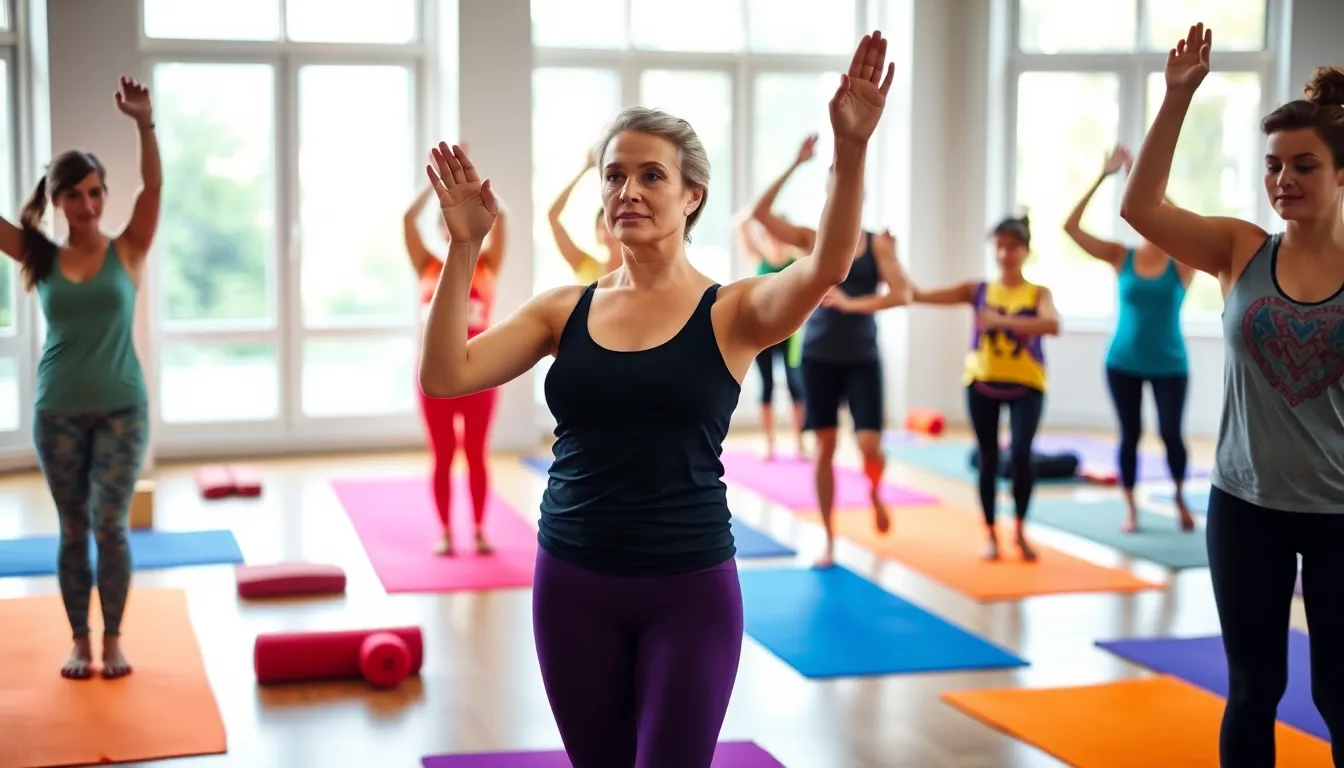
In a world where gym memberships often come with more excuses than results, Pilates classes stand out like a beacon of hope—or maybe that’s just the glow from the reformer. It’s not just about bending and twisting; it’s about discovering muscles you didn’t even know existed, all while trying to maintain a serene expression that says, “Yes, I totally meant to feel this way.”
What Is a Pilates Class?
A Pilates class focuses on developing strength, flexibility, and body awareness through controlled movements. Participants engage in a variety of exercises designed to target specific muscle groups while promoting mental focus.
History of Pilates
Joseph Pilates created the discipline during the early 20th century. Initially intended as rehabilitation for injured soldiers, he developed his method by blending elements from yoga and calisthenics. The method gained popularity in the 1960s as dancers adopted it to enhance their performance. Grounded in principles of alignment and core strength, Pilates continues to evolve while honoring its original concepts.
Benefits of Pilates
Pilates improves core strength, posture, and overall body alignment. It enhances flexibility by promoting muscle elongation and improving joint mobility. Participants often experience decreased stress levels through mindfulness and controlled breathing techniques. Many find the low-impact nature of Pilates suitable for various fitness levels, making it accessible. Additionally, it can aid in injury prevention and rehabilitation, offering a well-rounded approach to physical fitness.
Types of Pilates Classes
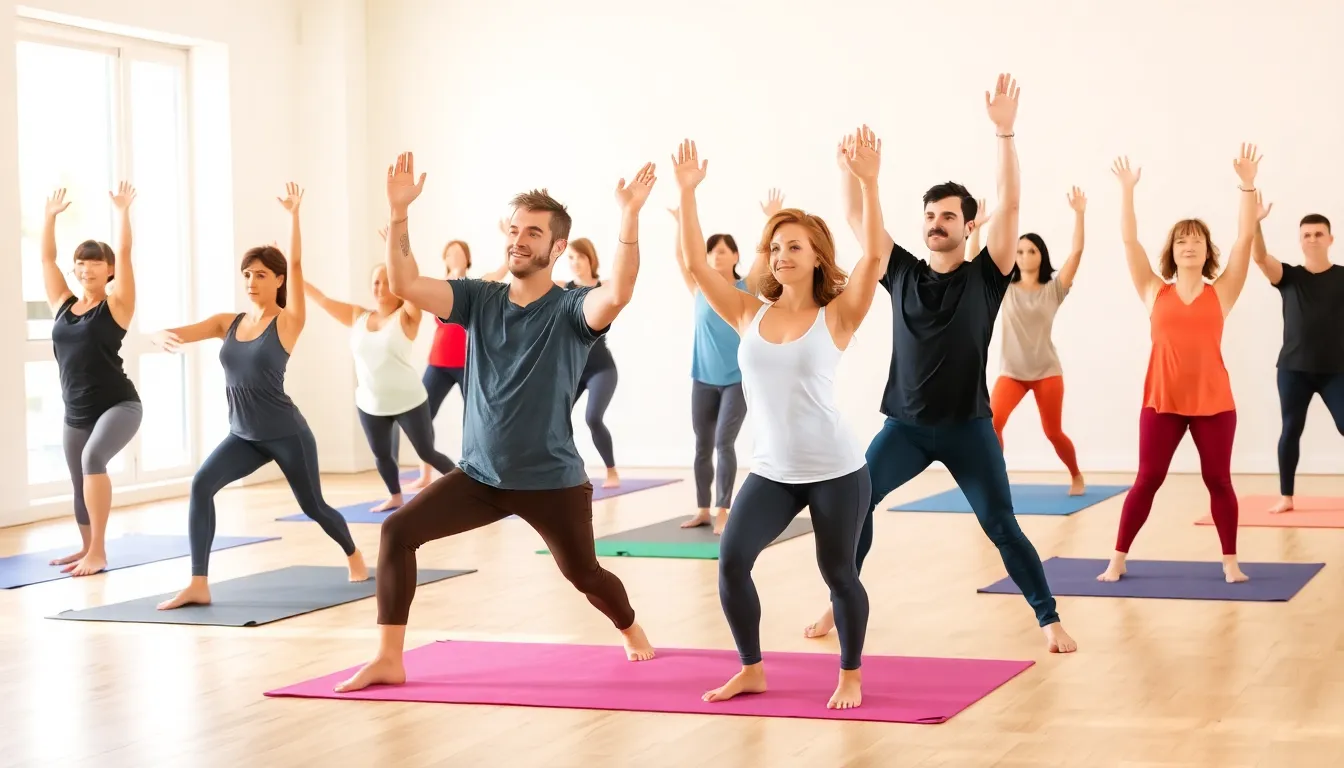
Pilates offers various class types tailored to different preferences and fitness levels. Understanding these types helps practitioners choose the right fit.
Mat Pilates
Mat Pilates focuses on exercises performed on a mat using body weight for resistance. Participants engage in a series of controlled movements that enhance core strength and flexibility. Classes often include props like resistance bands or small balls to provide additional challenges. Instruction emphasizes alignment and breathing techniques, which cultivates mindfulness. Mat Pilates suits individuals seeking a low-impact workout that promotes overall body awareness. Typically, these classes accommodate diverse fitness levels, making them accessible and inviting.
Reformer Pilates
Reformer Pilates utilizes a specialized machine called a reformer, which incorporates springs and pulleys. This equipment supports various exercises, allowing participants to perform movements with added resistance or assistance. Classes focus on engaging deep core muscles while promoting proper alignment and control. Instructors guide students through dynamic routines that increase strength and flexibility. This format suits those who desire a more intense workout and benefit from equipment assistance. Each session provides unique challenges, fostering progression regardless of experience.
What to Expect in a Pilates Class
A Pilates class offers participants a focused environment to enhance strength and flexibility. Classes vary in structure and exercises, depending on the format chosen.
Class Structure
Pilates classes typically last between 45 to 90 minutes. Each session begins with a brief introduction and warm-up to prepare the body. Instructions emphasize controlled movements and breath awareness throughout. Class formats may include options such as Mat or Reformer, each providing distinct experiences. Instructors guide participants through sequential exercises that target specific muscle groups. Most classes conclude with a cool-down to promote relaxation and recovery.
Typical Exercises
Common exercises include the Hundred, Roll-Up, and Leg Circles. The Hundred activates core muscles while improving circulation. Roll-Ups enhance spinal flexibility and core engagement. Leg Circles focus on hip mobility and stabilization. In a Reformer class, variations like Footwork and Short Box Series utilize the machine for added resistance. Overall, exercises promote a strong foundation, ensuring participants build on their skills progressively.
Choosing the Right Pilates Class
Selecting the appropriate Pilates class enhances the overall experience and outcomes. Caring for personal goals and fitness levels leads to optimal results.
Consider Your Fitness Level
Assessing fitness levels plays a key role in choosing the right class. Beginners benefit from Mat Pilates classes, which focus on body weight exercises and foundational techniques. Intermediate participants may thrive in Reformer Pilates, which offers increased resistance for muscle engagement. Advanced practitioners seeking intense challenges often prefer dynamic classes combining various formats. Understanding personal capabilities ensures comfort and progression, reducing the risk of injury. Evaluating experience helps determine the best fit, aligning goals with the right class intensity.
Finding a Qualified Instructor
Finding a qualified instructor ensures a safe and effective environment. Research instructors’ credentials and experience before committing to a class. Reviewing class sizes can also provide insight into personalized attention during sessions. Engaging with instructors allows for tailored guidance, essential for all levels. Consider instructors with a background in anatomy and injury prevention, particularly for those with prior injuries. Many studios offer introductory sessions to evaluate instructor teaching styles. Establishing a rapport with instructors enhances the overall Pilates experience, fostering motivation and progress.
Pilates classes offer a unique blend of physical and mental benefits that appeal to a wide range of fitness enthusiasts. With its focus on core strength flexibility and body awareness participants can expect a comprehensive workout that caters to their individual needs. Whether opting for Mat or Reformer classes each format presents its own challenges while promoting progression and injury prevention.
Choosing the right class and instructor plays a crucial role in the Pilates experience. By assessing personal fitness levels and seeking qualified guidance individuals can maximize their potential and enjoy the transformative journey that Pilates provides. Embracing this discipline not only enhances physical fitness but also nurtures a sense of mindfulness and well-being.

